


It’s Never Really About the Red Light

You’re in a rush, and the traffic light ahead turns red. You brake harder than you need to. Your hands grip the steering wheel. You might even swear out loud, using language you’d never use in public.
Ninety seconds. That’s what the red light costs you. Yet by the time it turns green again, your jaw is tight, your pulse is up, and the edge in your voice might linger at your next meeting, your next task, or your next conversation with someone you love.
It was never about the red light, though.
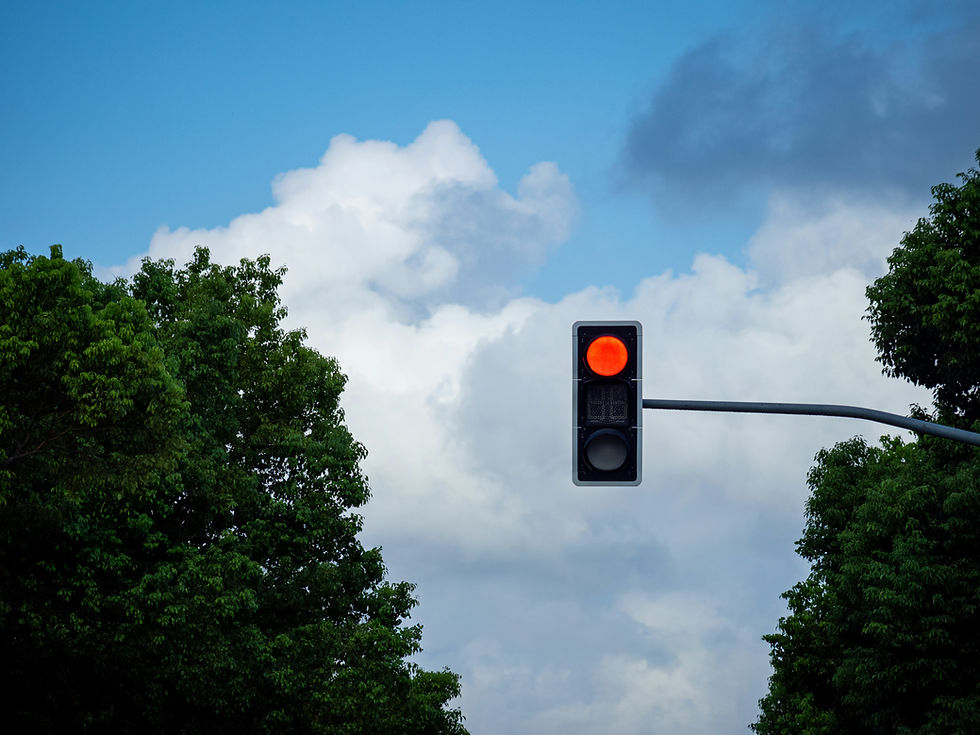
It could just as easily have been the checkout line that stopped moving, the laptop that froze mid-sentence, or the untidy kitchen left for you to clean up. The trigger might change. The reaction, and what’s behind it, tends to stay the same.
Maybe your morning started with fourteen unread emails and the realization that you’re behind on a work deadline. Maybe you and your spouse argued about who was supposed to call the plumber to fix the dishwasher.
Maybe your teenager shuffled into the kitchen, and you commented on the state of their room. Maybe their eye roll prompted you to say something sharper. And maybe they stormed out, closing the door harder than it needed to.
Then you grabbed your keys and your coffee and left the house eleven minutes late.
So by the time you reached the intersection, the red light wasn’t just a red light. It was the straw that broke the camel’s back.
What happens next is fairly well documented. When you’re rushed, overwhelmed, short on sleep, or running on chronic stress, the amygdala, the part of the brain that scans for threats, can become more reactive. At the same time, the prefrontal cortex, which supports perspective and impulse control, can work less efficiently.
Researchers use the term “allostatic load” to describe the cumulative physiological effects of ongoing stress. When you’ve been under pressure for a while, even a minor irritation can feel like the last straw.
When this happens regularly, it’s common to ask, “Why am I like this lately?” But that question tends to invite self-criticism.
An easier one to ask is, “What can I do to make life a little easier for myself today?”
Picture the same road on a different morning. You might still clash with your spouse and your teenager, and you might still be overworked, but instead of leaving late, you leave the house ten minutes early.
The light turns red just as you arrive. But this time, you have more space, and you barely notice. Instead, you watch the driver in the next car singing along to some song with enormous commitment. You might even smile. Or start singing in your own car.
Same red light. Completely different reaction. Simply because you’ve given the morning a little more slack to help you manage what can feel like everyday stress.
That little bit of space is what slowing down looks like in practice.
What If You’ve Already Snapped?
Some slack can help before the red light. Once you’re already gripping the wheel and swearing like a Peaky Blinder, it's too late for that. But what you do in the minute after the outburst can matter more than you think.

Here are a few things you can try, depending on what feels possible at the time.
Start with your breathing. Breathe in for three or four counts and out for about six. A longer exhale can help your body settle. As you breathe, see if you can drop your shoulders and release some of the tension you’re holding.
Let the pause be a pause. Whether it’s a red light, a slow checkout line, or a frozen screen, it’s tempting to fill the wait by stressing about the fourteen emails waiting for your attention, rehashing an earlier argument, or rehearsing the perfect comeback for later. If you can, let the pause stay empty for a few conscious breaths.
Name what happened. While you breathe, try to recognize what you’re carrying. Something as simple as “I’m tired, this morning was stressful, and that was the last straw” can help you step back from the reaction rather than getting caught up in it.
None of this will erase everyday stress. But it can help slow things down and stop one bad hour from becoming a bad day.
In other words, you can’t always control what the day throws at you, but you can give yourself a little more space to handle it. That’s why slowing down doesn’t have to mean a spa day or a meditation retreat. It might simply mean leaving ten minutes earlier or giving yourself a little breathing room between commitments.
Because most of the time, the red light isn’t the problem. It's just the moment you realize how much you’ve been carrying.


Comments